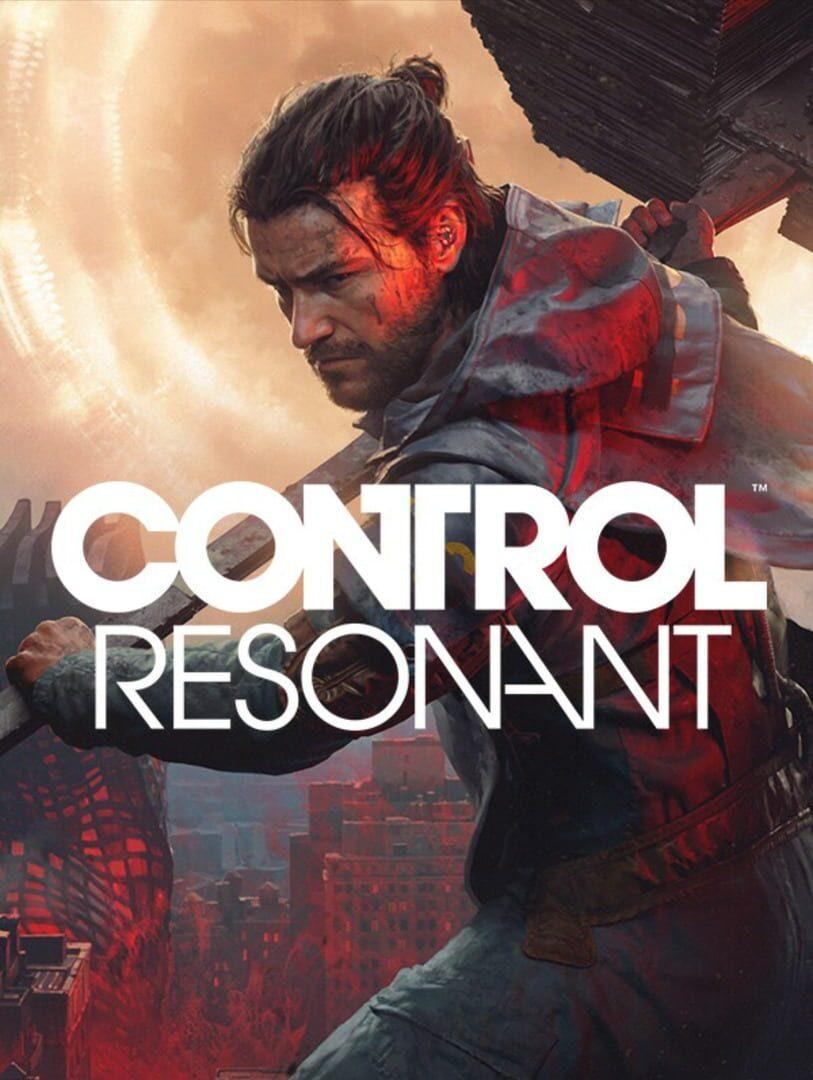
I’m glad that Control Resonant is doing its own thing and that Remedy is making whatever the hell it wants to make. I’m not particularly a fan of the first Control, to be honest. I’m more familiar with Remedy through Alan Wake, and this developer has always had a very distinct authorial identity. There’s something about its games that makes them recognizable, even when not everything quite works for me.
The Limits of Treating Games as Products
While writing down my thoughts on this game, I kept coming back to a question that goes beyond whether I liked it or not: when we score a video game “objectively,” are we evaluating the game as a product or as a creative work?
As a product, Control Resonant is very good. And, as always, we can start listing the caveats, because nothing is perfect and blah, blah, blah. We can evaluate the graphics, story, sound design, art direction, combat, and a long list of other categories that, while still having their merits, feel increasingly limited when it comes to explaining what an experience can mean to us.
Obviously, every one of these aspects matters. Hundreds of people spend years building systems, designing environments, composing music, and making sure everything works together. At the end of the day, our favorite medium is still software, if we look at it in its most fundamental form. But is understanding how a game works enough to understand what it represents as a work of art?
The Mona Lisa, Escher, and the Limits of a Score
Imagine if we could review paintings the same way we review video games. Suddenly, you find out that the Mona Lisa has a 95 on Metacritic. Fair enough. Leonardo da Vinci has a certain mystique around him, he’s considered one of the great figures of the Renaissance, and his work is part of our general cultural knowledge. Everyone knows the painting, has heard of it, or has seen it at some point.
The video game equivalent that comes to mind would be The Legend of Zelda: Ocarina of Time and Nintendo. These are works whose recognition goes beyond the individual experience of actually playing them.
 The
Now imagine that you’re really into M. C. Escher’s art. Something about his lithographs fascinates you. There’s something there that resonates with you. You go to Metacritic and, surprise, you find a mediocre score. Maybe the painting press was too busy reviewing the other fifty paintings released that month. Maybe its criteria focused on technique, execution, composition, or concept. A checklist, at the end of the day.

And there’s nothing inherently wrong with analyzing those things. Painting has its own set of established criteria, just as video games do. The problem starts when we assume that adding up those criteria gives us a complete picture of a work’s value. A score can tell us something about an overall assessment, but it doesn’t necessarily explain why a work moves us, fascinates us, or stays with us.
While trying to organize my thoughts on the game, I realized I was doing exactly the same thing: breaking it down into separate categories, identifying what worked and what didn’t, and trying to arrive at an overall verdict. But there was something that approach couldn’t quite explain. Why, even after certain parts of the game stopped holding my interest, did I still want to keep playing?
Combat Wasn’t What Kept Me Playing
First, I want to get something off my chest. My main issue with this game is that its combat system never fully clicked with me. It’s not a bad system. In fact, it looks spectacular and it’s fun to play. But the direction they took felt simpler than I would have liked. And again, I don’t think that’s inherently a bad thing. It just wasn’t what hooked me the most. I had a lot of fun during the first few hours, but as I kept playing, combat stopped being my main reason to pick up the game. I also think it takes a little longer than I’d like to really get going.
A Story That Doesn’t Always Land
The narrative left me with similar feelings, although for different reasons. My interpretation is that this game is partly about finding yourself again, even after you’ve forgotten who you are. Rebuilding yourself. There’s an interesting idea there, and I think the game manages to convey it at certain points, but its more arcade-like and less dramatic approach compared to Alan Wake 2 means the emotional weight gets diluted at times.
Both Control games seem to approach the dreamlike quality of their worlds from a perspective where everything is strange, nothing quite makes sense, and the characters are relatively used to living with it. I thought the voice performances were good. I don’t think the problem lies with the acting, but rather with a direction that often goes for a “well, everything’s weird, just another day at the office” kind of tone.
As a result, the narrative has its ups and downs. There are moments when the music, environment, dialogue, and context come together to create something that sticks with you, like the section where you have to make your way through infinite rooms. The whole setup works, and the moment carries real weight. But there are also times when the emotional impact doesn’t quite land with the same force.
I wouldn’t call it a disaster, nor do I think it’s the game’s weakest point. It just feels decent to me, without being one of the things I would highlight the most. And I think this could be a significant issue for people who want a more consistent and explicit emotional narrative.
However, and this is where things get interesting, neither the combat nor the narrative made me want to stop playing. What kept drawing me back was somewhere else entirely.
The Joy of Losing Myself in the World
What I loved most about Control Resonant was getting lost. Read that again: GETTING LOST in its world.

The level design in this game is absolutely insane. It’s a shame that people have talked about it, but that conversation seems to have gotten buried under so many other releases. Once you start getting more freedom, the game begins to show what it’s capable of.6
Anyone who played the first Control probably remembers the Ashtray Maze fondly. Well, I’d say a huge part of Control Resonant is about recreating similar feelings in different ways. It’s wild to find yourself in places that seem to defy every physical law we take for granted. Impossible architecture, endless spaces, backrooms, and environments that look like something straight out of a Doctor Strange sequence, but with Remedy’s own touch.
 Doctor

At first, I thought the game would be something along the lines of Christopher Nolan’s Inception, but it ended up being much more than that. What I enjoyed most wasn’t simply looking at strange environments. It was being in them. Exploring them, finding out what was behind each space, and letting myself get carried away by the feeling that I had no idea what I was looking at.

There were moments when I stopped caring about making progress. I wasn’t thinking about completing a mission, getting a reward, or reaching the next objective as quickly as possible. I wanted to keep exploring. I wanted to see what was around the next corner. I wanted to stop and take in what was right in front of me.
Every now and then, I’d turn off the UI just to enjoy the game in a more cinematic way. I kept taking screenshots simply because I liked what I was looking at. I didn’t need anything important to happen in the story or for the game to present me with some big set piece. Sometimes, the environment itself was enough.

The last time I felt something similar, just standing around and taking in the atmosphere for the sake of it, was with Elden Ring. Funnily enough, another game from a studio with a very distinct authorial identity.
I think this is one of its greatest strengths. It’s not just about having good graphics or impressive art direction. It’s about how those elements work together with the level design to create an experience that invites you to get lost. The environments aren’t just pretty backgrounds for the action to take place in. They’re a fundamental part of what it means to play the game.
And this is exactly where my painting analogy comes back into play. I can talk about composition, technical execution, lighting, textures, or the architecture of these spaces. I can point out specific design choices and explain why they work. But none of those observations, on their own, quite capture what it feels like to be inside them.
I wasn’t just admiring how the game looked. I was enjoying being in its spaces, moving through places that seemed to defy any kind of logic, and experiencing that strangeness in real time. To me, that’s the difference between describing the qualities of a work and trying to explain the experience it creates.

Spaces That Shouldn’t Exist
The art direction is among the best I’ve seen in this industry. The team seems to have stopped worrying about following certain standards and focused instead on building something that serves their own vision. And you can tell. You can see the care, work, and passion that went into every environment.
These spaces evoke a wide range of feelings, from the eerie and uncanny to the sublime. There’s something fascinating about looking at places that shouldn’t exist, trying to make sense of architecture that goes against our usual understanding of space, and accepting that there might not be a conventional explanation for everything we’re seeing.
The Appeal of What We Cannot Understand
I also think this strangeness connects to another aspect of the Control universe that I really enjoy. I’m fascinated by entities that exist beyond our understanding. I’m a science-minded person, but that doesn’t mean I don’t enjoy letting my imagination run wild and thinking about possible forms of consciousness that fall outside our current models. There’s something particularly compelling about a universe that lets you explore these ideas without needing to explain everything to you.
So even though the enemies can start to feel repetitive, I’ve found plenty to appreciate in the Resonant designs and in the way the game builds its world. I don’t need every single element to feel completely new to enjoy what the overall experience has to offer.
Letting a Work Remain Itself
And I think this also explains why I care so much about authorial vision. I don’t believe every game needs to appeal to everyone. A work shouldn’t have to satisfy every preference, and its creators shouldn’t have to change every decision just to make sure nobody feels left out.
The endless debate about difficulty in Souls games is a good example. If the developers decide to build an experience around a specific set of rules, I think it’s perfectly valid to defend that vision, even if it’s not what everyone wants. That doesn’t mean those decisions are beyond criticism. It means we should be able to distinguish between a decision that doesn’t work for us and one that’s necessarily poorly executed.
I feel something similar about Control Resonant. Its combat wasn’t what stood out to me the most, and its narrative has moments where I wish the emotional weight had been stronger. But that doesn’t mean I want the game to be something else. What I value most is that Remedy has created an experience with such a strong identity, even if that identity doesn’t make every part of the game work equally well.
What the Score Cannot Tell You
Ultimately, I think my experience with Control Resonant has made me reconsider what I want from a review. I don’t want to stop analyzing games, and I don’t think we should abandon technical criteria and limit ourselves to saying that we like something or we don’t. Analysis matters. It helps us understand how a work functions, recognize its strengths, and point out its limitations.
But I also think we need to accept that analysis isn’t always enough to explain its value.
Control Resonant has flaws that I can identify without much trouble. Its combat never fully hooked me, its narrative doesn’t always sustain its emotional weight, and there are aspects that could have worked better. However, none of those observations, on their own, explains why I enjoyed this game so much.
What stays with me is getting lost in its environments, turning off the UI to take in its spaces, and feeling compelled to keep exploring without needing a specific reward to justify it. That experience is real to me, even if I can’t translate it perfectly into a score.
Maybe that’s why this review was so difficult for me to write. Trying to break the game down into a series of categories and then reduce it all to a number felt insufficient to explain what it meant to me. It’s like trying to explain why a painting moves you by listing its technical qualities. You can analyze its composition, execution, and formal choices, but none of that guarantees it will resonate with you. And the fact that it does doesn’t mean it’s perfect either.
I don’t know if it will impact the industry’s approach to storytelling or art direction. I don’t think it needs to for me to justify how much I enjoyed it. I liked it, I highly recommend it, and I hope we continue to get games that dare to follow their own vision, even when that means not everyone will connect with them.
This time, I’d rather not turn my experience into an argument for a particular score. I’d rather explain why, despite its flaws, Control Resonant managed to fascinate me. Because I can analyze the game as a product and recognize everything that could be improved, while also recognizing the value it had for me as a work of art.
< The Work/Artifact Has Been Observed/Navigated >
< The Architecture/Experience Remains/Endures >
< Transmission/Review Concluded/Dismissed >
Pros
- Visually stunning, every corner could be a wallpaper
- Manages to evoke different emotions through its gameplay
- Simply playing it feels like a reward
Cons
- Combat is too simplistic to sustain the game’s length
- Its story failed to leave an emotional impact on me, although it did in other ways