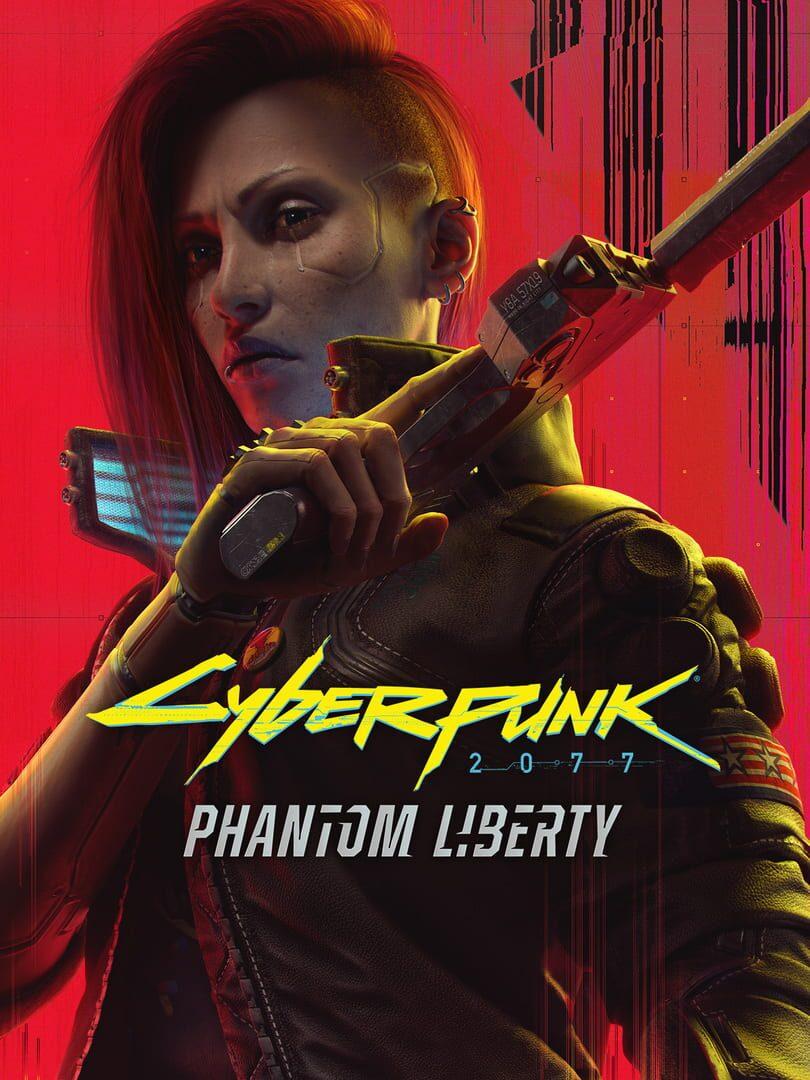
Did you know that Reed-Solomon is the algorithm our devices use to correct potential data errors in QR codes? I find it fascinating that Solomon Reed, one of the central characters in Phantom Liberty, shares the name with this error-correcting system. Just like the algorithm, Reed is a man committed to fixing mistakes but only within strict parameters. He operates by the book, correcting what is broken, but only as long as it does not disrupt the chain of command or question the system he serves.
Songbird, on the other hand, is a character who uses every tool at her disposal to achieve her goals. For her, the end does justify the means, even if that means lying to us from the very beginning, manipulating us into doing everything we do for her, knowing full well it is all based on falsehoods. Which makes sense if you think about it. She is the best netrunner in all of Night City. Like any good hack, she exploits every vulnerability. Not a single principle, but countless ones, layered over and over, revealing how deep she truly goes.
Does that make Solomon Reed a perfect hero and Songbird the perfect villain? Absolutely not.
None of them are black or white. Within their ideals lies a history full of nuance and complexity. Reed isn’t just a loyal soldier, just like Songbird isn’t simply a manipulative traitor. They’re both shaped by a broken world, marked by scars, regrets, and contradictions that don’t only collide with each other, but with their own selves. That’s what makes this DLC so powerful: the moral ambiguity, the sense that whatever choice you make, you’re never entirely right or wrong.
After all, can you blame the code for the system that runs it?
Reed and So Mi are the central duality of Phantom Liberty, and between them stretches a vast, scorched void: Dogtown.
Dogtown is a place forsaken by its people, by the state. It feels like God abandoned it long ago, and yet it still runs, like a rusted gear grinding away. Unstable, deafening, but somehow still turning in its own… twisted rhythm.
That ryhytmn is Kurt Hansen, a former military man who seized control of Dogtown and runs it like his own personal pigsty. (Author disclaimer: Of course, lurking in the shadows is Mr. Hands, pulling strings from behind the scenes. Every pawn is on the board, alongside bishops, knights, kings, and queens). Night City is tough, no doubt. But Dogtown? Dogtown is impossible.
I love how CD Projekt Red shines when it comes to worldbuilding, creating immersive experiences, charismatic characters, and brutally honest stories. I think Cyberpunk 2077 is a good game. Sure, far away from perfection, it had a rough start with the bugs and memes, and it’s redeemed itself over time. But even now, it still feels somewhat unfinished. The city is stunning, the artistic direction is top-notch, and missions like Sinnerman hit incredibly hard. Yet, much of it feels… empty. You can see the seams. You can feel where the base game hurts, where it tried to be something more and couldn’t quite make it.
Phantom Liberty, on the other hand, feels dense. There’s something toxic in the air, something heavy that clings to every cracked sidewalk and flickering neon sign. It’s not just history. It’s residue.
CD Projekt Red is famous for making expansions that outshine their base games. Blood and Wine is arguably better than The Witcher 3 in many ways. Hearts of Stone too, was brilliant. But this one… damn…
It’s packed with unforgettable moments and unique mechanics you’ll only use once in a specific mission. The level of care and love poured into it is remarkable.
I’m sure the community’s favorite mission is the one where we infiltrate Kurt Hansen’s party. It’s genius. From how you get there, to the setup, the tension, the roleplay, the gameplay. Grimes flying and singing “Delicated Weapon” (I mean, Lizzy Wizzy). The twin brothers from France with their eccentric personalities—they only appear a couple of times, and yet they feel essential to the world.
This is simply one of the best stories I’ve ever experienced in a game. It made me feel more like I was inside a great spy thriller than most actual spy thrillers ever have. The writing is sublime. Every ending hits hard. Really hard. My favorite? The one where you side with Reed, and you’re thrown into a section that plays out like full-on survival horror in the style of Alien: Isolation.
Phantom Liberty doesn’t just expand the world of Cyberpunk 2077. It deepens it. It drags you into its shadows, whispers conspiracies in your ear, and dares you to care in a world where caring can get you killed. It’s a story about sacrifice, betrayal, and the gray zones in between. And for those willing to listen, it offers one of the most impactful, unforgettable experiences the medium has to offer.