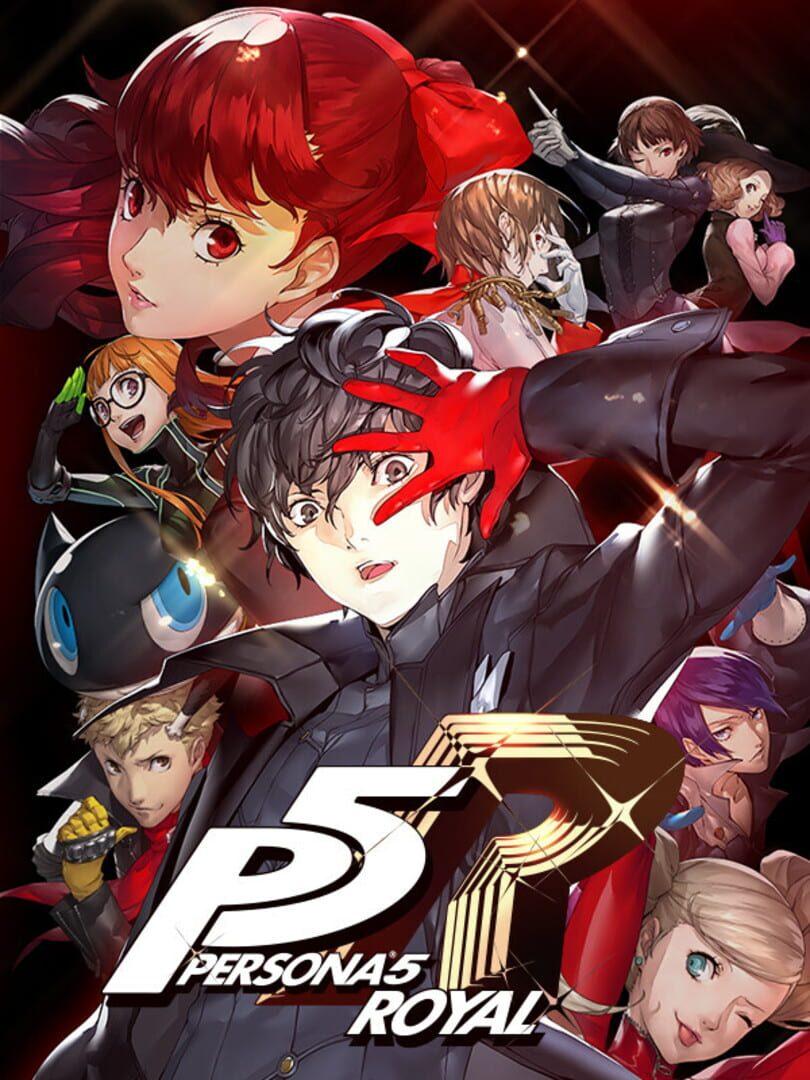
“Tell me what the Devil’s Dictionary defined as the chief factor in the progress of the human race.”
It’s a question Mr. Ushimaru asks you on just another ordinary school day in Persona 5 Royal. The correct answer is “villains.” Ambrose Bierce, the book’s author, suggests that those willing to break the status quo, even if seen negatively at the time, are the only ones truly capable of making meaningful change in society. In a similar spirit, the definition goes something like:
Villain. A person who does not conform to the standards of the social or moral order.

This question, which may not be so subtle, can easily get lost in the wealth of ideas Persona 5 Royal wants to address. To me, it perfectly captures one of the game’s main themes, if not the most important: rebellion. Don’t be fooled by its aesthetic. Persona 5 may seem like a celebration, and it is, but it’s a celebration against the system. It has more in common with works like Fight Club (1999, David Fincher) or V for Vendetta (2005, James McTeigue) than with a simple life simulator with pop influences. The game’s beautiful style works as a Trojan horse to inject players with ideas that will echo throughout more than a hundred hours of gameplay, prompting them to question not only the fictional Japan they explore, but eventually, their own reality. You set out to change hearts, not realizing the biggest infiltration is into your own.
 Fight
Before anything else, I have to ask, who is the genius who decided to start the game with a flashforward? And then have you wait around sixty or seventy hours to see what happens next? It’s just brilliant. It feels so true to the game’s vision. It builds up huge anticipation. When you reach that part of the game and The Whims of Fate starts playing, you just know everything is about to explode.
Rebellion in the game isn’t just narrative, it’s an aesthetic experience. The colors, the menu design, the frantic yet elegant music, the iconography of thieves, masks, and flames. All of it is visual rebellion. The aesthetic of Persona 5 Royal is widely praised, and I agree, but I want to emphasize just how cohesive the whole game is. From the exquisite acid-jazz inspired music and its lyrics (seriously, the music in this series is insanely good, but I guess everyone knows that already), to the sharp dialogue windows, the highly stylized and surreal UI in text messages, the battle win screen, the character designs, and the Velvet Room as a metaphor for the soul trapped in an unjust world. So many details, countless details, scream rebellion right in your face. Very punk, in a way.
The Phantom Thieves are more than just a group of young superheroes, or rather, “supervillains” in the context of the story. They’re a movement. Think about it, how many real-world movements, past or present, have disturbed people, shaken up ideas, and sparked controversy. But that’s what’s needed—to shake, to stir. The first song from Persona 5’s album, Wake Up, Get Up, Get Out There, says it all:
Wake up, get up, get out there
Raise your voice against liars
Feed your anger like fire
Why does nobody want change?
Just imagine you’re out there
Swatting lies in the making
Can’t move fast without breaking
If you hold on life won’t change
The messages in this game work so well because they deeply inspire you. They invite you to dream, to imagine yourself in that world you long for. Even for a second, imagine the possibility of understanding someone’s cognition, of changing it. It doesn’t matter how many existentialist books you’ve read, or whether you believe in absurdism or nihilism. These messages are hard not to be moved by. They push you to act, to raise your voice against injustice, even if today these messages may seem cliché or repetitive. The truth is they’re not. Why do we think they are? The game begs you not to lose that rebellious spirit, not to hand your thinking over to someone else, something that’s actually well explained through the terrible collective mentality in the Palace of Mementos. You are the change. Find people who align with your vision of the world to make it better, and break the rules that no longer work or that corrupt cognition even more.
But not everything is that simple. The game doesn’t glorify, it also questions.
How far is it valid to rebel? What happens when the Phantom Thieves become idols? When you see people supporting you on the fansite bar, is that why you do it? For popularity? For the people? I was the first to feel something beautiful seeing that meter rise, and then to feel awful when people stopped believing in the team. But it was never about whether others believed in the purpose of the Phantom Thieves. It was about the wings of rebellion that live within. The game is very insistent about this. It literally uses the word “rebellion” when you form a new confidant bond. It’s not the only time the game questions whether the group is doing the right thing. Throughout the story, you’re faced with situations that force the group, and the player, to reflect. But I think the ending, Maruki’s Palace, takes this question to one of its most extreme points. Why rebel? How easy is it to fall into ego or manipulation, even when starting from a just cause? It’s up to you, the player, to process these doubts.
In an RPG, the party is one of the most important aspects, and this game absolutely delivers. Hardcore Shin Megami Tensei and Persona fans might argue there are better characters in other games, and I respect that, but I’m not here to compare. I’m here to speak from within this game’s limits. The characters, more specifically, the confidants, are one of its strongest elements. Each confidant represents a micro-rebellion: characters confronting their fate, their family, their trauma. It’s not the only game that deals with trauma, but here, with cognition involved, it leads to moments that are pure art. You can easily empathize with all of them, their circumstances, and motivations. No wonder it’s the most successful game in the series and that Atlus has expanded it with so many spin-offs. They’re incredibly memorable.
Think about it. It’s so comforting to walk into Leblanc, hear Beneath the Mask, have Sojiro greet you, receive a message from the group, go to sleep with Morgana by your side. Slurping noodles with Ryuji, helping Ann with her modeling, seeing Yusuke and Futaba be so eccentric, running into Yoshizawa and feeling her deep respect for you. Supporting Makoto as she tries new things, growing vegetables with Haru. Visiting Iwai or Takemi to restock, or maybe playing a round of shogi with the superstar Hifumi. Seeing a mystical future with Chihaya, fusing Personas with Caroline and Justine. And so many others.
All of the supporting characters have their own charm and importance, in one way or another. But for me, the most important ones are Takuto Maruki and Goro Akechi.
Goro Akechi stands out as one of the best-written characters in the game. Unlike the other confidants, Akechi has more layers, which gives him a depth that leaves a mark. Maybe you can predict some of his moves, but what I love most is that the truth was always there. I love watching him go from the charming, justice-driven detective with his Persona Robin Hood to the manipulative Loki. Those final battles with him are epic, especially with how much he enjoys underestimating his opponents and his more mocking nature. He’s basically what Sephiroth is to Cloud. It’s interesting, because Robin Hood is similar to Arsène Lupin. He’s a noble thief who steals from the rich and corrupt, not out of greed, but for justice. His presence in Joker represents the ideal of the noble thief, someone who operates outside the system because the system itself is broken. While Robin Hood is closer to classical ideals of justice: public, structured. Arsène Lupin is more ambiguous, more philosophical, and more deeply human. For Robin Hood, there are clear good and bad guys. For Arsène Lupin, maybe things are more grey. There aren’t many purely bad people, but there are many people who do bad things. This is something we explore in changing people’s hearts in Palaces and Mementos. We can see their motivations and what led their desires to become distorted. Even if it’s not justifiable, you understand that part of them is still good, still capable of facing their actions and feeling regret. Maybe it’s a way of saying that Robin Hood no longer fits the world we live in.
Before moving on to Maruki, I want to talk about the antagonistic forces of the game. They are very good, in my opinion some of them falter slightly, but all of them serve to organically develop the story from how we are a lonely person whom no one knows or wants to be with, to how we end up as a united team with the strength to accomplish impossible things, capable of creating Rivers in the Desert. Sae Nijima is the main antagonistic force during the first half of the game, and her role is magnificent. As I mentioned before, her Palace is one of the best in the entire game, everything feels designed for this moment, a great heist in a casino. Epic.
But going back to the beginning, what keeps you going in the game is Kamoshida, who is key, you really feel like you want to bring him down. You hate him, he gives you reasons to want to stop him. Madarame, Kaneshiro, and Okumura might not give you a direct reason to want to defeat them, but it is not just about fighting those who hurt you directly, it is about fighting everyone who harms society in some way and indirectly hurts us. As is said at key points in the game, “remember why we do this.” Shido, on the other hand, I would say he is the only truly evil person that the game presents. Everything around Shido is based on intense selfishness, on an arrogance worthy of a corrupt politician who prefers to live at the expense of thousands of innocent people. I think it is like a great staircase that takes all the characters to epic heights and allows the game to explore not just one issue in contemporary society, but many. Many layers.
Returning to the topic, I mentioned that Takuto Maruki is one of the most important characters. His Palace simply gives the necessary twist to keep questioning the Phantom Thieves and puts the player on the table, how far is it valid to rebel. Spending time with Maruki is worth every second, everything about human cognition that you can indirectly delve into with this character is captivating. Seeing your allies go to him and always finding a breath of fresh air. His advice, his messages, are fascinating. Unlike all the other antagonistic forces, Maruki distorts his desires to do good. A happy world, a paradise. It is here when I really doubt, am I being selfish by wanting to reverse Maruki’s desires where everyone is happy? If you decide to follow Maruki’s vision, the game ends with everyone happy. Period, no more unhappiness in the world. That is the best, right? It would be foolish not to accept it. Well, if you decide otherwise, you will find how important it is that, just like happiness, sadness is part of our wide range of human emotions. Is it not more selfish to idealize that everyone should be happy and demonize sadness as the worst thing that can happen to us in life? That seems to be what we do. Although Maruki’s intentions are good, we cannot allow someone to take away our opportunity to face our own struggles. Even if, hypothetically speaking, there were no more people committing malicious acts in life, things would still happen that would hurt us and are part of our nature. The people we love will die, natural accidents could happen, maybe a heartbreak, maybe we will fail to achieve something we deeply long for. Both our strengths and our wounds will always lead us toward paths where we will have the chance to try again, from the beginning. Something like what Maruki says in the true ending. The wounds are what made something so unreal possible, like a group of students coming together and fighting side by side in this great adventure as the Phantom Thieves. In the end, they healed, in their own way.
Everything else has already been said. You know it. The music is phenomenal (have I mentioned how phenomenal it is?), the visual design is impeccable, the gameplay is incredibly addictive and entertaining. It’s a fantastic JRPG and, more importantly, a master class in how to use video games as a medium. It’s the gameplay, it’s the music, it’s the art direction, it’s the characters, it’s the message. What an incredibly well-rounded game, almost perfect. I genuinely admire Atlus and the entire team for creating this masterpiece.
On the final day, walking through the streets to say goodbye to the confidants, I already felt a deep sense of nostalgia. How many hours did I spend in this world? I’ll miss everything I love about this work, and I wish there were more games like it. And like every great game, the sense of emptiness after finishing it is immense. What an incredible game. It inspired me to be better.
Persona 5 Royal didn’t just give me an unforgettable story; it reminded me that rebellion, sorrow, and hope are inseparable parts of being human. And in the process, yes… it ended up stealing my heart.