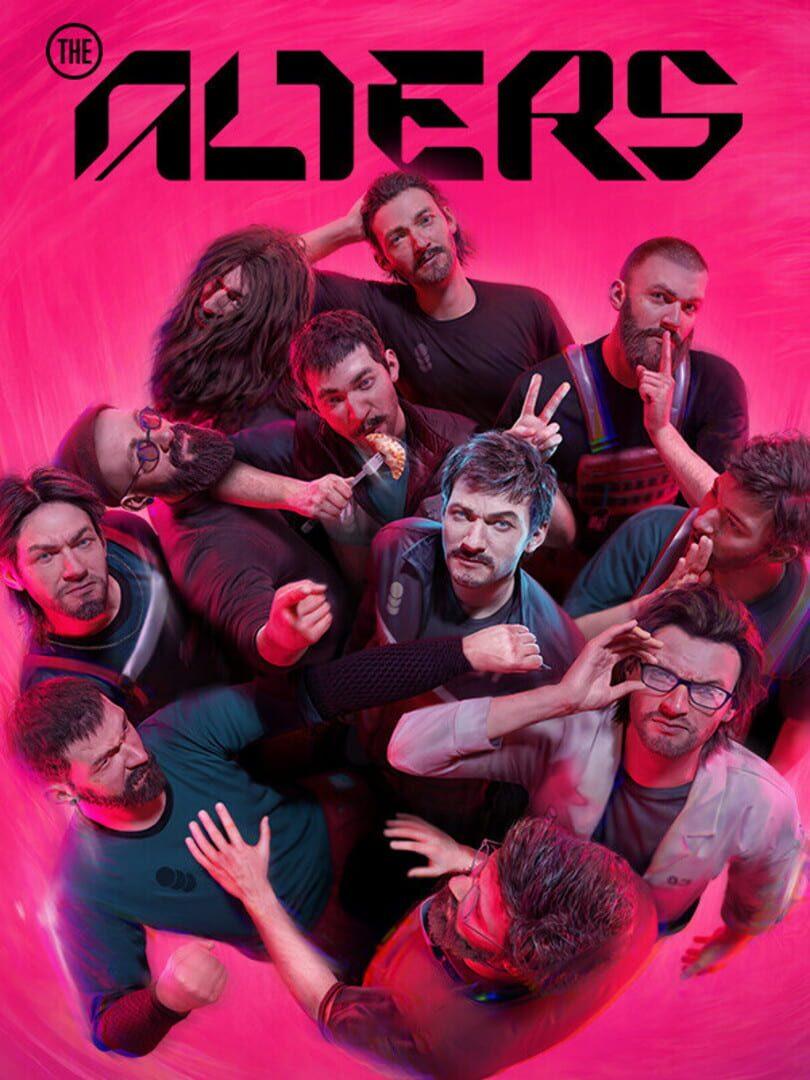
When Jan Dolski becomes the only survivor of a space expedition and finds himself stranded on a planet with scarce resources, he must do the impossible to survive. After a series of tragic events and the discovery of a strange material called rapidium on the planet’s surface, his remote superiors suggest an idea that is apparently illegal but might be his only salvation: cloning himself.
That’s how The Alters begins, one of the most incredible games I’ve played this year, full of heart and personality, and a true hidden gem.
The Alters blends many ideas and genres, and it does almost everything remarkably well. I’m not entirely familiar with 11 bit studios’ full history, but you can clearly feel the influence of This War of Mine (2014) and Frostpunk (2018). There are also traces of No Man’s Sky (2016) and even The Sims (2000), something I didn’t realize I missed this much. Add the cinematic sci-fi tone of films like Interstellar (2014, Christopher Nolan) or The Martian (2015, Ridley Scott), and the result is something extraordinary.
 This
 Interstellar
I’m not sure whether this game fits a particular niche or if it simply aligns perfectly with my own tastes, but I was glued to my screen for days, managing resources like a madman and optimizing every second like a mastermind.
My question is simple: how was this game ignored?
It’s sad how little visibility it received because it deserves much more. I thought Kingdom Come: Deliverance II (2025) was one of the year’s hidden gems, but The Alters feels like one of its ghosts.
The premise and narrative are its strongest aspects. The game constantly explores philosophical questions that cut surprisingly deep.
Are you who you are because you were destined to be, or because you chose to be?
If you had made different decisions, would you be happier?
Would things be better or worse?
And most importantly:
If you had chosen differently, would you still be you?
This is my kind of thing.
Across its roughly twenty hours, the game presents a series of scenarios that range from profound to unexpectedly comical. Meeting different versions of Jan Dolski always feels rewarding, both narratively and mechanically.
In gameplay terms, it’s almost an existential work translated into systems. The core loop is addictive: gathering and automating resources, expanding your base, and managing the emotions of your Alters to prevent potential rebellions. Mistakes can cost you entire in-game days, whether because you prioritized the wrong task or reached a critical moment unprepared and out of time.
The three acts of the game feel carefully balanced. Less content would make the experience feel incomplete. More would likely turn repetitive. Instead, it lands right in the middle.
Prepare your brain for serious multitasking.
The original soundtrack fits the game perfectly. It might not leave you stunned, but it captures the vulnerability of existing on an alien world where time never stops moving. It reinforces the mystique of space exploration.
The licensed tracks add a relaxed and human atmosphere that I really enjoyed. I remember playing beer pong with one of the Alters for the first time. Even though the graphics aren’t cutting edge, the art direction and NPC behavior made the moment feel surprisingly alive.
The Alters themselves are another highlight.
Having an extra Alter makes survival easier, but their emotional stability is just as important as your production chains. Each new Alter feels like a reward. They are limited per run, which means you cannot recruit them all at once.
Player decisions shape each act and ultimately the ending. The branching paths aren’t as expansive as those in Baldur’s Gate 3 (2023) or Divinity: Original Sin 2 (2017), but the system works well. In its most important moments, the game confronts you with moral dilemmas where the correct answer is never obvious, much like in real life.
If I had to point out a flaw, it’s that not every system reaches its full potential. Some mechanics and abilities feel underused. Maybe that’s partly because of my obsessive playstyle where I optimized everything, but it still feels like certain late-game systems could have been pushed further. Some Alters simply aren’t essential.
All secondary characters are voiced by the same actor, Alex Jordan, who delivers an impressive performance. Even though the voice behind every Alter is technically the same, each version of Jan feels distinct and believable.
Jan the scientist (a.k.a. neurodivergent Jan) is nothing like Jan the engineer.
Jan the botanist is more sensitive and careful.
Jan the technician is cockier and reckless.
Meeting the versions of Jan Dolski he could have become created some of the game’s most memorable moments. They start to feel like a real crew.
At one point I remember watching a movie with them and laughing at the same moment another Jan did. Pure magic.
Getting to know them and completing their story arcs is another major strength. The developers repeatedly bring you back to the same question:
If you had chosen differently, would things actually be better?
The game shines here.
At first glance, another Jan Dolski might seem to have lived a better life. But every one of them carries a burden: trauma, heartbreak, betrayal. They see the world differently. They want different things.
Nothing is perfect.
Even when they made different choices, they still face struggles you cannot fully understand. But you can empathize with their pain, insecurity, or frustration.
This leads to an uncomfortable thought:
Are mistakes really mistakes?
Is there truly a correct path?
Even if you make the best possible decision, your future remains uncertain. Success always carries a cost. Your personal life, your relationships, your stability. You might achieve your goals and still end up alone.
Every Alter teaches you something, literally as part of the game’s mechanics.
The possibilities in front of you feel endless. Jan Dolski has an important lesson to learn, and the game invites you to walk beside him through discovery, regret, introspection, and reflection.
How did Jan Dolski end up here?
Was it just a chain of random events?
And what about you, the player?
This game is beautiful in many ways. I loved getting lost on this hostile yet strangely mesmerizing planet, meeting the different versions of Jan Dolski, and eventually stopping myself from asking what if.
Instead, the question slowly becomes: What is?
Who am I right now?
What choices define me in this moment?
And what does it mean to live the life that actually exists, not the one that could have been?
Pros
- Excellent premise and philosophical storytelling.
- Deep exploration of identity, choices, regret, and personal growth.
- Addictive resource management and base-building gameplay.
- Carefully balanced three-act structure.
- Engaging multitasking and survival mechanics.
- Distinct and memorable versions of Jan Dolski.
- Impressive voice performance by Alex Jordan.
- Strong character development and emotional story arcs.
- Meaningful moral dilemmas and branching decisions.
- Excellent atmosphere, art direction, and environmental design.
- Soundtrack reinforces the isolation and mystique of space exploration.
- Licensed music adds a relaxed, human atmosphere.
- Memorable interactions between the Alters.
Cons
- Some mechanics and abilities feel underused.
- Late-game systems could have been developed further.
- Some Alters feel nonessential.