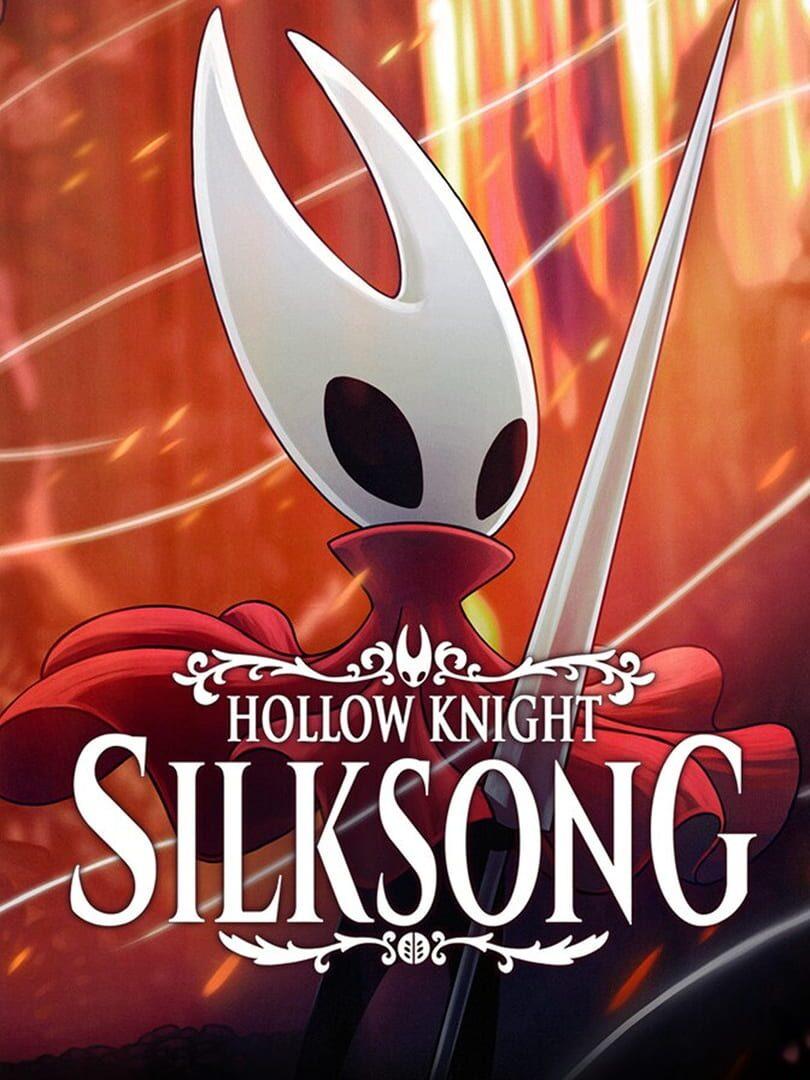
I let the silk wrap around me, thread by thread, until I could no longer tell where I ended and it began. Its dark world devoured me slowly, as the violins wove their strings into sounds that reverberated in my mind. Though rising was difficult at first, in the end I no longer feared falling again. I saw everything I had built with my hands. Faces, echoes, melodies that guided me along the way. When the void whispered surrender, it was the silk, that same obsession, that lifted me from the ground once more.
Among landscapes that breathe silence, I found creatures that did not simply live but felt. Serenity, anguish, melancholy, hope, all suspended in the air as if time itself refused to move. With the needle in hand, I pierced the veils of the world. The impossible became arduous, the arduous became habit, and habit became fate.
I was not eagerly waiting for Silksong. Hollow Knight is a great game, one of the best of its genre, but I never truly connected with it. Maybe because I grew up with Aria of Sorrow, and my first metroidvania love happened long ago. I returned to Hollow Knight several times, I admired it, I studied it, but something in its rhythm never fully belonged to me. Silksong, however, managed to capture me completely.
Team Cherry made the game they wanted to make, with all the strengths and weaknesses that choice brings. The beginning feels long, and I think it’s because it wasn’t a great design decision to start with 5 health slots instead of 6. Since everything deals 2 damage and Act 1 only gives you 1 slot to gain, you’re still dying in three hits. It doesn’t feel like a proper progression, which stretches the wait to feel even a little more powerful and in control. I feel like it’s a subtle but heavy flaw. Even the more debatable aspects, such as the abundance of horde-like encounters, the extended walks to reach certain bosses, or the slow build-up common in the genre, feel deliberate rather than flawed.
But Silksong suddenly shows you another side, a part of it that pulls you in, and you hit this huge momentum where you become one with the game without even realizing it.
What defines Silksong is its feel, the way it resonates as a whole with the music, the ambiance, and the subtle impressions you absorb in silence. The precision of its movement, the flow of its combat, and the constant sense of control are what elevate it. The narrative is compelling and elegantly presented, It’s wild to feel the obsession this game has with silk. Everything revolves around silk; the songs are mostly just strings, with a few exceptions for choirs or bells, but it almost feels like everything is made of silk. I love it, because it’s so important both narratively and in the gameplay. The act of playing that gives the experience its real meaning. I’ve played a lot of metroidvanias, and sure, there’s backtracking, but this game rewards exploration far more, very much like Elden Ring. If you can’t handle something, keep exploring, and you’ll find viable alternatives. (Author’s note: I know Team Cherry said Hollow Knight didn’t take inspiration from FromSoftware’s works, but I can’t help suspecting that Silksong did, for many reasons, including the level design and how insanely interconnected everything feels.)
The key lies in Hornet herself. She is pure agility, a body that dances between precision and instinct. Silksong forces you to move differently, to think differently. It is a change of mindset for anyone who loved the first game. There are more options, more builds, more charms. Maybe the loss of Hollow Knight’s minimalism could feel excessive; for me, it feels like evolution. The movement and verticality transform the experience, they do not just expand it. It is a world that breathes faster, but never feels shallow.
Another thing that defines Silksong is that Hornet has a defined personality, something that sets her apart. Her style, the way she carries herself, is captivating. She is firm, disciplined, fair, and precise. She treats those who deserve it with respect and challenges those who don’t. She is a memorable character, worthy of a great video game. The characters in this game are absurdly memorable. Sherma’s gentle song and his innocent personality make him unforgettable from the very first moment. The beautiful (truly beautiful) voice of Shakra and the way she shouts “POSHANKA” melt into your own story as a player. Being at the flea camp feels endlessly warm. Even the enemies have their own unique presence. I love how the battle against the Last Judge begins, how The First Sinner feels like a frantic dance, while The Cogwork Dancers resemble a ballet. And I could go on with so many more examples. This game overflows with personality, something that isn’t appreciated as much as it should be in games. It never feels generic, never like just another title in the pile. There’s something truly special once you let yourself be caught in its threads.
What truly amazes me about Silksong is how it meets every expectation I didn’t even know I had. In a year filled with many strong AA releases, this game stands out by proving that the real reward lies in the act of playing itself. Every area, every boss, every encounter with a secondary character feels like an honest reward, more game, more discovery. This game is the dream of many companies: a modest budget, a huge success. We will remember it as a phenomenon in the years to come.
While Acts 1 and 2 are fantastic, it’s Act 3 where everything blows up emotionally. The bosses are insane, and it really feels like you’ve reached the defining moment of your adventure, where you put everything you’ve learned to the test. The ending of this game is powerful, emotionally. Those final scenes feel like the cherry on top. I reached Act 3 almost by accident, and it amazed me to realize it was optional, because it holds some of the most striking and memorable moments in the entire game.
Silksong its a game that rewards you not with points or trophies but with the simple desire to keep playing. A game that does not fear letting you fall but teaches you how to use the fall as momentum.
When the thread tightens, when the silk threatens to tear, you realize that its essence was never fragility. It is not about when it will break, but about what it can endure. In that endurance you find the force that carries you forward again and again.
And when the song fades, you realize it never truly ended. It simply became part of you.