The Belle Époque was a paradox: a time of cultural splendor, scientific breakthroughs, and artistic innovation, yet beneath it all lay deep inequality and a fragile sense of stability. Paris dazzled with progress and creativity, becoming the grand stage for luxury, excess, and avant-garde movements.
Still, it was beautiful only for some. That illusion of unshakable progress came crashing down with the First World War.
As historian Michel Winock explains in La Belle Époque: La France de 1900 à 1914, the term Belle Époque was coined after the war, when France, devastated by loss and crisis, began to romanticize the years before it. If we were to sum up the idea, it would be something like les années de vie versus les années de mort (the years of life versus the years of death).
As the fin de siècle approached, existential anxiety became widespread. Many contemporaries sensed that those “good old days” might be a fleeting illusion, progress that, once set in motion, masked the imminence of historical rupture. In the 1890s, “everything seemed like an omen of some future radical upheaval or cataclysm” to come with the new century. In the art and literature of the period, themes of pessimism, ennui, and fear of social decay took center stage.
That constant interplay of light and shadow, of scientific-artistic optimism and decadent anguish, is the very essence of clair-obscur (Chiaroscuro), the painting technique that inspired the game’s title. It not only defines the visual identity of Expedition 33, but also shapes its philosophy, symbolism, and central conflict.
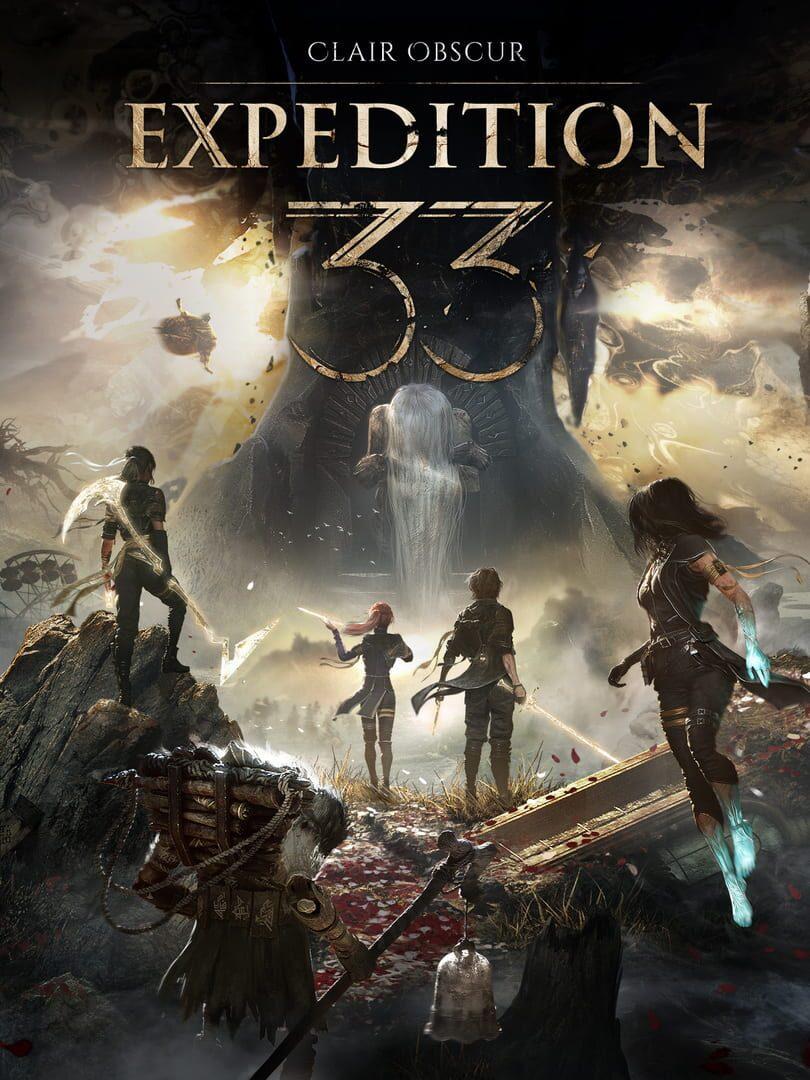
Clair Obscur: Expedition 33 transports us to Lumière, a Belle Époque-inspired city once known for its artistic and scientific brilliance, now spiraling into madness and disintegration. Each year, the dreaded Peintresse paints a number in a monolith; all citizens of that age vanish instantly. As the number 33 is painted, time is running out for humanity. This eerie and original premise serves as a metaphor for modern disillusionment: progress no longer saves, it condemns. The game doesn’t just borrow the Belle Époque’s aesthetics, it captures its tragic soul, its broken beauty, and transforms it into a lucid fable about the fragility of progress.
Talking about this game is a dense task. No matter how much I try, I know I won’t be able to cover all of its themes with the depth they deserve. What I want to make clear from the start is that I think this is a fantastic game, a fantastic (J)RPG with a fascinating combat system that encourages meticulous builds, a stunning soundtrack, and superb artistic direction. I’ve spent countless hours immersed in its audiovisual beauty, all the way through to platinum. And even with all that, I still think it falls a bit short of the greatest genre-defining RPGs. That’s not a bad thing, especially considering that this is Sandfall’s first formal release. And despite the overblown narrative that “only 30 people made it” (when in truth it was more if we count the third-party teams, an usual practice during development, that’s not shokcing), that’s not what I find admirable at all anyway. What I find most admirable is the honesty behind its origin. The director grew tired of working at Ubisoft, and that exhaustion became the starting point for something new.
As a developer myself, I understand that feeling, realizing that in a massive company, we’re just another number. Our creative potential gets overlooked as we develop things the business wants, but people don’t seem to.
Like I’ve said in some of my reviews, and I stand by it, I don’t get to decide what becomes iconic. It’s not up to one person. Time tells us which works of art truly transcend. And while, today, I wouldn’t place this game alongside the likes of Final Fantasy, Persona, Dragon Quest, or Nier, I wouldn’t mind at all if time proves me wrong.
The game is divided into three major acts, each culminating in a significant twist. From a narrative perspective, I’d say the story is good, though not phenomenal. That’s a subjective take, of course, but it’s definitely refreshing to have a party made up of adults rather than high schoolers or “chosen ones” on some divine mission. The game’s lore is fantastic. Its world-building was one of my favorite aspects, especially considering how hard it is to break into today’s market with a brand-new IP. It manages to create recognizable characters and species in most cases. The opening with Gustave and Sophie is powerful, emotional, and well-paced, with excellent direction and music. That said, I wouldn’t say this level of consistency holds throughout the entire game. Some scenes try to be artistic but don’t quite land. The pacing can be jarring, with flat reactions, dull moments, and a certain emotional hollowness in places. The voice work occasionally misses the mark, and overall, the cast feels a bit uneven. Despite the compelling lore, I found it hard to fully connect with some characters. I’m not exactly sure why. I tried both the English and French voice tracks, but the feeling persisted. Maybe it’s a matter of direction, or perhaps it has to do with the surreal facial expressions rendered in Unreal Engine 5, which can feel a bit unpolished compared to full-blown AAA productions.
That said, I don’t want to frame this as something terribly executed. On the contrary, there are some really well-executed scenes throughout the game. The final scene, for example, is emotionally charged and leaves you with a lot of questions that might stick with you long after it ends. There are also moments of excellent cinematic direction. I can think of three in particular: the battle with the Dualliste (a.k.a. Pontiff Sulyvahn), the battle with Sirène, and the final fight. The first has a truly epic moment, while the other two are rich in composition and atmosphere. Very, very well done. Kudos to the team.
Speaking of Unreal Engine 5, the visual fidelity is solid, definitely good. But the artistic direction is breathtaking. The way the game plays with the Peintresse’s concept and what she’s capable of is genuinely imaginative. That said, sometimes the use of Unreal Engine 5 is a bit too apparent. In rare moments, the game can feel somewhat generic. Certain physics and scenes feel clunky. Platforming is not good and occasionally feels like disconnected assets thrown together, hurting immersion, even though the game’s world is largely surreal. The lighting can also be inconsistent, and you get the sense that some polishing is still needed. These aren’t deal-breakers, but they are the kinds of details that separate a great game from an exceptional one. It’s similar to what you might experience in Lies of P, another UE5 title.
Back to the art direction. Unreal landscapes, lush green fields, shattered impossible structures, ruins that hint at ancient giants, forests in bizarre, vibrant hues, places that feel like the edge of reality. It’s beautiful. Honestly, much of it reminds me a lot of Elden Ring. And it’s not just in the visuals. There are clear influences from Miyazaki in Expedition 33’s gameplay mechanics too. I’ll get to that soon.
I love that the game features an overworld. It’s a welcome return to the feel of classic JRPGs like Final Fantasy, where overworlds were iconic. It gives me a strange sense of warmth and familiarity. In fact, the overworld gives off Nier-like vibes.
Where does this game truly shine? Without a doubt, combat. It’s incredible. The battle UI is sleek and next-gen, clearly influenced by Persona, though here exploiting a weakness doesn’t grant you a “1-More.” The combat system draws heavily from Lost Odyssey’s QTE mechanics, mixed with Sekiro-style parries, all turn-based. I spent hours optimizing my build with Maelle, unaware that others were breaking the game with builds doing millions in damage, which eventually got nerfed. The stat-scaling system is straight out of Dark Souls, with weapons ranked D, C, B, A, and S.
Miyazaki’s influence is everywhere. And that matters, because while the game demands strategy, especially in the wild end-game challenges, it also requires skill: to dodge, to parry. That might be jarring, even vulgar, for hardcore JRPG purists. But I loved it. It’s not the hardest thing in the world, but it’s challenging enough to keep you hooked. Every fight leaves you wanting more. Enemy variety is solid, and they make good use of the game’s mechanics, though some could use better audiovisual feedback to better signal the exact moment for a dodge or parry. Still, most are very well-designed. Simon, arguably the most difficult boss in the game, feels like a direct fusion of Marika from Elden Ring, Ludwig from Bloodborne (moonlight greatsword and all), the Four Kings, and Manus from Dark Souls.
The optional high-difficulty areas are extremely satisfying to clear and force you to rethink your builds. The Luminous and Pictos work similarly to Final Fantasy VII’s Materia system, a brilliant design choice. That said, the Picto menu UI is terrible. You do get used to it after a few hours, but it badly needs improvement. It’s one of the clearer signs that this is the studio’s debut game.
Act 3 is the best in terms of gameplay. It offers tons of optional content that truly motivates you to keep playing, completely unlike your average Ubisoft title that floods your minimap with repetitive objectives.
The soundtrack is another standout. There are truly great tracks, while others are just solid. Some blew me away. Others served their purpose. I love how the music sometimes narrates the expedition like a fable. That, for some reason, feels very Final Fantasy to me. These details show the love behind this project.
I’ve loved exploring this new world, and while I think the hype might be a bit exaggerated, much like last year’s Black Myth: Wukong, I’m glad that a turn-based game has captured the public’s attention. I don’t know if this will be a turning point in the industry, but I’m glad players are giving games like this a chance. I suspect Ubisoft plays a major role in shaping that: both through media influence and how it affects consumer perception. The idea that a megacorp might finally learn its lesson is comforting, but that’s not what makes Expedition 33 special.
In the end, Clair Obscur: Expedition 33 may not be the definitive JRPG of our time, but it stands as a bold, beautiful, and deeply personal statement from a team that clearly poured their hearts into their work. It dares to imagine, to challenge conventions, and to reflect on the myths of progress and control that often shape both our games and our world. That alone makes it a journey worth taking and remembering. If this is only the beginning for Sandfall, I am genuinely excited to see where they go next.