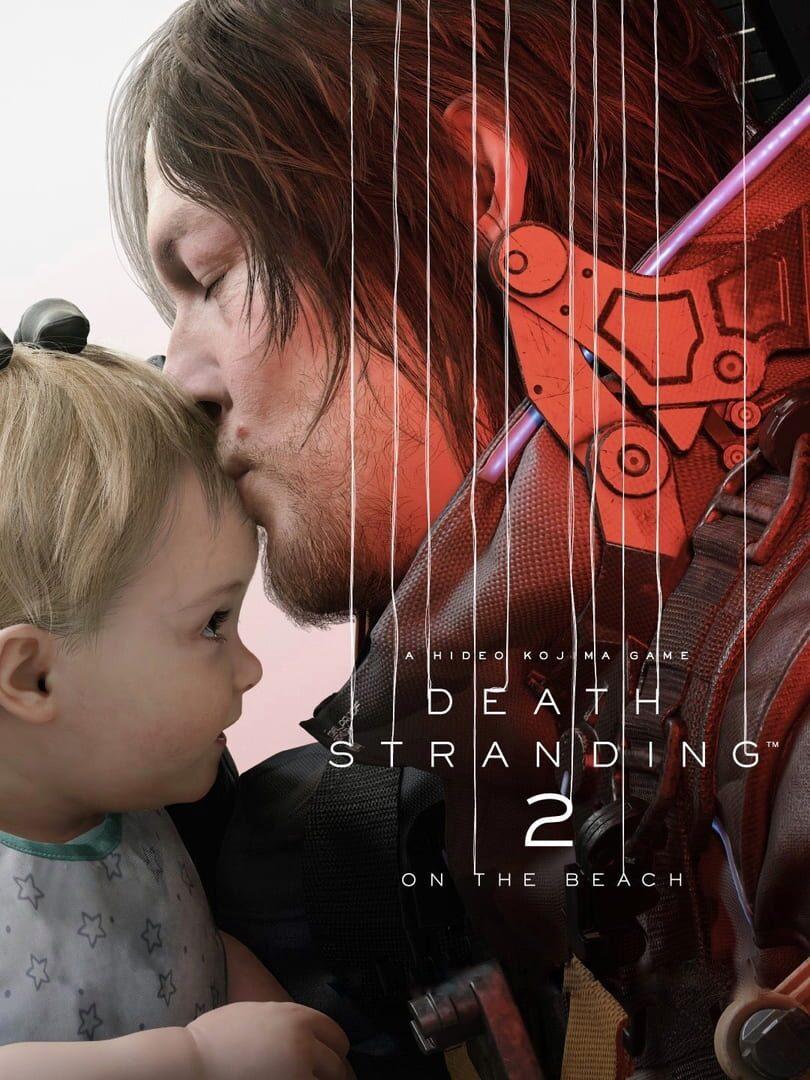
Death Stranding 2 doesn’t open with a quote or a preset of what lies ahead. Not like the first game, where we were introduced to the metaphor of the stick and the rope. But this one ends with one. And to me, it brings to an almost perfect close one of the most important works of surrealist science fiction of our time as players:
“Though the future is a product of every present that precedes it. Tomorrow does not belong to today. To live is to imagine ourselves in the future, and there we inevitably arrive. Yet our place in said future may not be the one we envision.”
Kojima’s admiration for Kōbō Abe is obvious throughout the surreal universe of Death Stranding. This quote works as a quiet reminder of humility. We build the future with our actions today, yes. But that future does not belong to us. Even if what we imagined was just an illusion, the future still arrives. That’s part of being alive. And Kojima knows this.
That’s why he flips the formula. He knew we were expecting a philosophical intro like last time, but this time, he throws you straight into the journey. Into the gameplay. Almost no words. Because now, you don’t need the world explained to you. You already lived it.
Death Stranding 2 assumes you’ve already taken that first journey. Where you connected all of America to the chiral network. Where you met the landscape, Sam, Lou… but most of all, yourself. That journey where, as you walked and delivered packages, you came to understand yourself a little more.
Now that the message has been understood, absorbed, processed… this sequel is not about the same thing. Even though you’re still connecting people, still crossing almost a continent, the question that hovers over everything is clear. It’s in the trailers. It’s the name of the first track on the official soundtrack: Should we have connected?
Kojima questions your entire previous journey. Was it worth it? This game, in many ways, feels like a farewell. Take your time. It’s a grieving process. Walk as long as you need to. Fall down and stay there if you have to. Stand up when you’re ready. And know this: if you truly understood everything before, this time, you are not alone.
Now, I do think the story has a few predictable twists. And the message itself isn’t exactly new. But what is new is how the game makes you feel it. Mechanically, it’s very similar. A continuation. But the emotional framing is different.
Where the first game made connection hard — terrain, physics, technical or deliberate limits — this one makes connection easier. It’s smoother. More intentional. This time, you want to disconnect. To disconnect from what hurts you.
Is that the message? To disconnect from the bad? I’m not sure about that. Because as time passes, what happened doesn’t just vanish. You just learn to live with it.
This game, to me, is beautiful. Not just because the Decima Engine is amazing. Not just because the landscapes look like living paintings. It’s beautiful because it’s less pretentious than the first. More intimate. More human. A huge success.
Kojima lets his cast go even more over the top, but never loses the emotional truth of his characters. They’re all unbelievably memorable. How does Kojima make characters so absurd and yet still make them feel real? You understand them. You feel their motives.
The new additions are incredible: Tarman, a captain sailing through tar with a flying cat. Metal Gear vibes? Yes. Rainy, a woman who literally makes it rain when she shows up. Tomorrow, whose DOOMs accelerate the time of anything she touches. Higgs is back, with ghostly mechs and an electric guitar. Dollman, a puppet who speaks in low FPS and carries a devastating backstory. Neil Vana, basically Solid Snake but Mexican. All of it works.
Try explaining this to someone outside the gaming world and they’ll think it can’t possibly be deep. But we played it. And we know it is.
This game gave me so many emotions. Through its characters. Through its cinematic cutscenes. Through its pacing. Even just through its landscapes. And its silence. The music, both original and licensed, is insanely good. And yes, in terms of gameplay and action, it’s also just straight-up fun. Some moments are epic in the purest sense. There are kaijus and Guitar Hero 3 boss fights with a touch of Mortal Kombat.
Still, despite all the good, I admit the story didn’t surprise me as much as I expected. But that’s not a bad thing. Because what I experienced, though familiar, was presented in a completely new way. This journey felt personal. Very personal.
Kojima has spoken openly about legacy. And I see it here, in every detail. It’s full of things he loves. His humor. His obsessions.
So… should we have connected? Maybe that question isn’t just about the chiral network. Maybe it’s about Sam and Lou. Maybe it’s about us and video games. Us and a creator. With other people. Absolutely yes.
And even if there’s always a “What if…?” What if everything goes wrong? What if it hurts me? What if it’s not what I expected?
“Yet our place in said future may not be the one we envision…”
Do it anyway. Connect anyway. Whatever happens, whether it aligns with your illusion or not, is beyond your control. But that shouldn’t stop you from experiencing everything else. Don’t miss the rare chance to feel something real. Even if one day they have to say goodbye.
I’ve seen so many real stories reflected in Death Stranding 2. Saying goodbye to a daughter must be devastating. But so is losing a father. Or a mother. A partner. A friend. Are you really going to tell me you shouldn’t have connected with them?
What you’re left with is a memory. An object. A place. A beach. Something that keeps you tethered to who they were. And so… not even death can tear you apart.