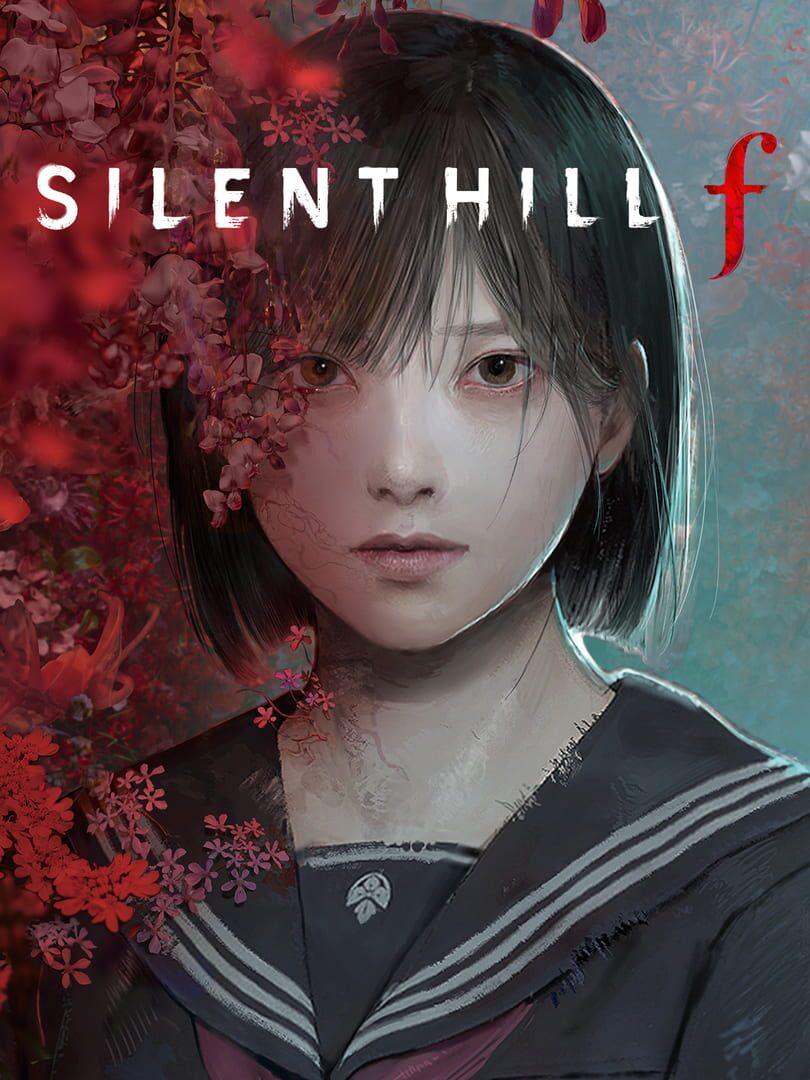
Prologue. Author’s (little big) love letter to Silent Hill
It is 1996. Only a few months earlier, Capcom had helped solidify an entire genre, drawing inspiration from Sweet Home (1989) and shaping it into something new. With Resident Evil (1996), the company formalized what we now call survival horror, a genre that today feels almost extinct. For many players, it truly came into focus on the PlayStation.
 Sweet
Konami noticed the success and wanted a share of it, but without taking major risks. The company gathered a group of developers whose previous projects had failed or who did not quite fit within its internal structure. Their task was simple: create a new IP inspired by Resident Evil, one that could succeed outside Japan, particularly in the American market. (This detail will matter later.)
Konami did not invest much in the project. Expectations were modest. It was closer to a cautious experiment than a confident bet.
Then one decision changed everything.
To motivate the team, Konami gave them complete creative freedom.
The rest is gaming history. You already know the outcome. A series that, nearly thirty years later, people are still discussing. One that disappeared for years and left a noticeable void.
Before continuing, you should know something: I love Silent Hill. Especially the first four games developed by Team Silent.
Looking back, I remember how I first experienced them simply as horror games. I was too young to understand many of their subtleties or the themes hidden beneath the surface. Seeing how these games have been reevaluated over the years as important works in the medium only confirms something I always suspected: they were misunderstood. Both the press and parts of the audience struggled to process them at the time. That is not unusual. It happens often with works that arrive slightly ahead of their moment.
To me, those four titles are pillars of gaming. Their reputation did not grow because of nostalgia alone, but through years of discussion, analysis, theories, and the lingering sensations they left in players long after the console was turned off.
I. The loss of identity: Silent Hill f
1.1 Historical context
Silent Hill f is set during Japan’s Shōwa era. For people in Japan, that reference may not immediately stand out. For Western audiences, though, it carries stronger implications. Much of our cultural perception of Japan comes from anime and video games, the media most widely exported abroad. Silent Hill f might share certain aesthetic traces with those forms, but the game itself is not really about anime or video games.
The Shōwa era can challenge many Western assumptions about Japan.
The period spans from 1926 to 1989, covering the reign of Emperor Hirohito. It was one of the most turbulent and transformative periods in Japanese history. Early decades were marked by increasing militarization and expansion, culminating in Japan’s involvement in World War II. After the defeat in 1945, the country was occupied by Allied forces, primarily the United States, until 1952. During that occupation, Japan underwent major structural changes: a new constitution, political democratization, and the demilitarization of the state.
Japan had already begun opening to the world during the Meiji and Taishō eras, but the postwar period truly reintroduced the country to the global stage. American influence shaped many of the reforms. Western capitalism, cultural imports, and international trade accelerated the country’s reconstruction. In return, Japanese culture gradually began attracting global attention.
By the 1960s and 1970s, Japan had become an economic powerhouse and a symbol of postwar recovery. The 1964 Tokyo Olympics showcased this transformation to the world. Yet social change does not occur evenly. While cities modernized, rural areas often remained tied to older traditions.
Ebisugaoka, the fictional town in Silent Hill f, reflects this tension. The outside world moves forward, but certain places remain anchored in older structures of belief and social pressure. Hinako’s story unfolds inside that contradiction.
Fun fact: Ebisugaoka likely combines “Ebisu,” a Japanese god associated with fishing and fortune and one of the Seven Lucky Gods, with “gaoka,” meaning hill. Ebisu is traditionally described as partially deaf, which is why worshippers would beat drums during prayers to ensure he could hear them. In that sense, “Ebisugaoka” can be read almost literally as “Silent Hill.”
1.2 The Two Hinakos (or the White Bird and the Black Bird)
There are effectively two versions of Hinako in Silent Hill f. The first playthrough can feel confusing, but one detail becomes increasingly clear.
The Hinako we control appears to be a teenager, perhaps thirteen to fifteen years old. Yet the real Hinako seems to be older, likely in her twenties. The game hints at this early, when she says at school: “I remember when I used to study here.” That line does not quite make sense if she were still a student.
Some explanations are literal. Others are symbolic. A possible interpretation is that the older Hinako had been taking strong medication, perhaps related to White Claudia, the plant referenced throughout the series.
Her father lost the family fortune after a series of bad decisions, falling into debt and dragging the Shimizu family into social decline. At some point in her past, Hinako formed a sincere bond with a boy named Kotoyuki Tsuneki. One day in Ebisugaoka Park, Kotoyuki was bitten by a fox, and Hinako helped him. Their connection was genuine.
Later, Hinako’s father arranged a marriage between the families to restore their status.
That moment shattered something inside her.
It was not that she did not care for Kotoyuki. The problem was the lack of choice. The decision was imposed.
Throughout the game, Silent Hill f explores oppression, particularly toward women, but that is only part of the picture. The central theme is the erosion of personal identity.
In rural Japan during the 1960s, marriage often meant that a woman effectively disappeared from her previous life. Friends sometimes spoke of the bride as if she had died. Sakuko and Rinko treat Hinako’s marriage that way. They call her a traitor, mourning the loss of their friend as if she were already gone.
Hinako’s grotesque transformation into a monstrous bride that devours those around her works as a metaphor. It represents the destruction of identity and the severing of past relationships.
Her diary entries repeatedly mention thinking with “a calm mind and a clear heart.” It reads almost like a mantra for self-knowledge.
Shu, her childhood friend, remains loyal but immature. He assumes he understands her desires without actually respecting her autonomy. His affection turns possessive.
Kotoyuki’s return complicates things further. The arranged marriage reflects the social norms of the period, where women’s choices were frequently constrained by family decisions.
Sakuko’s isolation pushes her to cling to Hinako. Rinko hides deep insecurity behind a colder personality. Each relationship exerts pressure on Hinako’s sense of self.
Her suffering manifests symbolically through the crimson flowers blooming within her body. They are beautiful and violent at the same time, suggesting suppressed anger and emotional pain.
The wedding ritual makes the metaphor explicit: Hinako cannot marry without destroying parts of herself and everyone around her.
Her resistance is not selfishness. It is a struggle to preserve her identity.
1.3 Coming Home to Roost
In the default ending, Hinako loses control during the wedding ceremony and kills the guests.
The timeline surrounding this event is unstable. The game deliberately blurs the sequence of events, leaving room for interpretation. The massacre may not represent a literal act of violence, but the complete collapse of the identity forced upon her.
The wedding consumes everything: family, friendships, and memory.
Other endings, including Fox’s Wedding, The Fox Wets Its Tail, and Ebisugaoka in Silence, explore different responses to that conflict. Resignation, rebellion, acceptance, or renewal.
Each ending reframes the same struggle from a different angle.
1.4 Faith and tradition
Ebisugaoka functions as more than a setting. It acts as an archive of belief systems layered over centuries.
Early inhabitants believed in the Water Dragon, a mythical being representing unexplained natural disasters. Later, devotion shifted toward the Divine Tree after a wandering monk claimed that a sacred cedar absorbed the dragon’s poison.
Over time, tsukumogami practices merged with this belief system. Broken tools were offered to the tree as ritual objects. By Hinako’s era, these traditions had blended into forms of Inari worship, with fox statues scattered across the landscape.
Most villagers no longer understand the full history behind these rituals.
The gods in Silent Hill f reflect human belief rather than objective divinity. Faith changes shape as communities reinterpret disasters and traditions.
In the endings, the survival of Ebisugaoka depends on which belief system remains dominant. When faith disappears entirely, protection vanishes, and the land becomes hostile.
1.5 The Weight of Choice
No ending feels definitive to me.
Each represents a different facet of Hinako’s struggle between imposed roles and personal autonomy.
Silent Hill f does not aim to present a single “true” resolution. The meaning emerges from the tension between what is imposed and what is chosen.
Just as Silent Hill 2 examined guilt, Silent Hill 3 explored grief, and Silent Hill 4 focused on isolation, Silent Hill f centers on the fragile preservation of identity.
Family expectations, friendships that become obligations, and cultural traditions all shape the individual.
The horror does not come from monsters alone. It comes from the difficulty of living with oneself.
II. Experiencing Silent Hill f as a Complete Product
2.1 What I didn’t like as much
The combat system feels disorienting.
It is not terrible. The mechanics connect sanity, stamina, and health in interesting ways, with some light RPG elements through attribute upgrades. Still, the system sometimes clashes with the tone of the game.
Certain encounters briefly resemble action oriented games. I do not mean that it becomes something like God of War or Devil May Cry, but the pacing of some combat sections pushes the experience in that direction.
Some areas force repeated fights that escalate quickly. The “fox arm” sequences in particular left that impression on me.
Combat also makes Hinako feel too powerful at times. That sensation repeatedly breaks the tension the narrative tries to build.
When combat is not the problem, stamina often is. The system punishes the player heavily, especially on higher difficulties, leading to frustrating encounters.
I have seen streamers begin the game on hard mode and abandon it early because of this. They left before experiencing the later runs that reveal the deeper structure of the story.
At the same time, Silent Hill has never been remembered for its combat. From Silent Hill 4 onward, developers tried to refine it, but fighting mechanics were never the series’ defining strength.
The older games were not intentionally clumsy “to serve the narrative.” Their limitations were largely technical. Tank controls and early 3D design shaped those systems more than deliberate design philosophy.
2.2 What I loved
Outside those issues, the rest of Silent Hill f stands among the most interesting releases of 2025.
It feels strangely out of time. The game carries the spirit of cult classics from the PlayStation 2 era such as Fatal Frame II: Crimson Butterfly (2003), Kuon (2004), Rule of Rose (2006), Haunting Ground (2006), and Forbidden Siren (2006).
It feels like a tribute to that period of survival horror.
The game also embraces the atmosphere of Japanese horror traditions, where fear emerges through implication, silence, and reflection.
I am not an expert on Japanese culture, but the influences are visible. Beyond Ryukishi07’s writing, the game draws from Junji Ito’s imagery, films like Jigoku (1960), and elements of Shinto folklore. Ritual objects such as ema and omamori appear throughout the environment, along with the idea of tsukumogami, objects that acquire spirits over time.
It is worth remembering that the original Silent Hill (1999) was designed partly to appeal to Western audiences. That decision shaped the tone of the early games and may explain why they resonated strongly in the United States.
Silent Hill f takes the opposite direction.
In a Famitsu interview, the developers explained their approach:
“This time we began with the idea of exploring what would happen if we worked with one hundred percent of the essence of Japanese horror.” (Famitsu, July 2025)
This shift makes the game feel different from previous entries.
Despite that difference, it still feels unmistakably like Silent Hill. The series has always experimented with new concepts.
You are never completely certain what you are witnessing. Is it psychological? Religious? The result of cult activity, drugs, or something else entirely?
That ambiguity has always defined the series.
During the long hiatus, a simplified interpretation became popular: that Silent Hill is purely a psychological phenomenon reflecting the characters’ minds. The truth is less clear. The games never offered a single explanation.
Interpretation has always been part of the experience.
The story is the strongest element here. Ryukishi07’s writing slowly reveals deeper layers across multiple playthroughs.
At first, the premise seems straightforward: the life of a woman in Shōwa era Japan, constrained by social expectations. But repeated runs introduce subtle changes. Dialogue shifts slightly. Notes offer new perspectives. Certain cutscenes gain different meanings.
By the second run, the story begins to feel like a different narrative entirely.
Hinako is one of the strongest protagonists the series has produced. The supporting cast works well overall, though some characters, like Sakuko or Rinko, could have been explored further.
The performances are striking. Occasionally the script becomes too explicit, such as when Hinako directly comments on her mental state. Even so, many details remain easy to miss, so these moments serve as gentle guidance.
The cinematics are beautiful. Their pacing, color composition, and sound design feel reminiscent of PS2 era survival horror cutscenes, though now rendered with modern clarity.
Ebisugaoka itself is fascinating to explore. It reminds me somewhat of Bright Falls from Alan Wake II, though more contained. While Bright Falls feels like eternal autumn, Ebisugaoka feels frozen in time.
The rural landscapes, rivers, and traditional architecture remain beautiful even beneath the fog. Instead of rust and decay, the game relies on flowers and body horror.
Inside the dungeons, the series’ signature design returns: impossible architecture, looping corridors, and spatial distortions.
Enemy design is particularly strong. Many creatures combine organic, porcelain, folkloric, and natural elements. One enemy, Oi omoi, reminded me of the Twin Victims from Silent Hill 4: two porcelain dolls fused along a shared spine.
It makes little logical sense, yet it creates an unsettling image.
Not every design works equally well. A few enemies, such as the glowing or shackled figures and the drum monsters, lean toward exaggerated visuals that break immersion slightly.
Boss fights, though, are remarkable. They range from grotesque body horror to abstract religious imagery.
Akira Yamaoka returns with a soundtrack that leans heavily on traditional Japanese instrumentation rather than the industrial rock tones of earlier games. Still, certain melodic motifs immediately signal that this is Silent Hill.
Sound design overall is excellent. Often you locate enemies by sound alone, and sometimes the game uses audio purely to create unease.
2.3 A fear I cannot fully understand
Like the other entries in the series, this story invites repeated interpretation.
The true ending leaves many questions unanswered. Even now, I cannot fully explain why events unfold the way they do.
In some ways, the game reminds me of Silent Hill 3. It is terrifying, but that same terror makes its themes difficult to grasp completely.
I cannot fully understand certain experiences depicted in the narrative. I have not lived the life of a woman under those social conditions. I have not experienced that particular form of pressure.
Hinako initially appears immature. You see fragments of her suffering, but never the full picture.
Only after several runs do you begin asking a more uncomfortable question: who is actually responsible here?
Then you remember that Silent Hill rarely deals in heroes or villains. The series focuses on human contradictions.
People can be victims and perpetrators at the same time.
Perhaps in a few years the community will revisit the game and develop new interpretations. For now, any definitive reading feels premature. Too many details remain open.
III. ƒinal thoughts
This is a strong survival horror.
It feels like a genuine return for the series, reconnecting with the elements that once defined it: the psychological, the religious, the inexplicable.
The marketing slogan speaks about “finding beauty in horror.” The game certainly achieves that.
But it also recalls a phrase associated with the series since the beginning:
“The fear of blood tends to create fear for the flesh.”
I am curious to see where Silent Hill goes next. The series still has room to explore new ideas.
Even with its flaws, Silent Hill f is absolutely worth experiencing. It does not need to be the greatest game ever made to be meaningful.
What it does offer is something rarer: a modern survival horror that remembers where the genre came from.
Pros
- Strong narrative and layered storytelling.
- Excellent exploration of identity, oppression, and autonomy.
- Beautiful artistic direction and atmosphere.
- Strong Japanese horror influences and cultural symbolism.
- Excellent soundtrack by Akira Yamaoka.
- Creative enemy and boss designs.
- Beautiful cinematics and sound design.
- Multiple playthroughs enrich the narrative.
- Faithfully preserves Silent Hill’s identity.
Cons
- Disorienting combat system.
- Repetitive encounters that disrupt pacing.
- Excessively punishing stamina system.
- Combat occasionally undermines horror tension.
- Some enemy designs break immersion.
- Underdeveloped supporting characters, particularly Sakuko and Rinko.
- Occasional overly explicit dialogue.